Obsidian Flex: The 3D Bitmap Font for Bold, Glossy Design
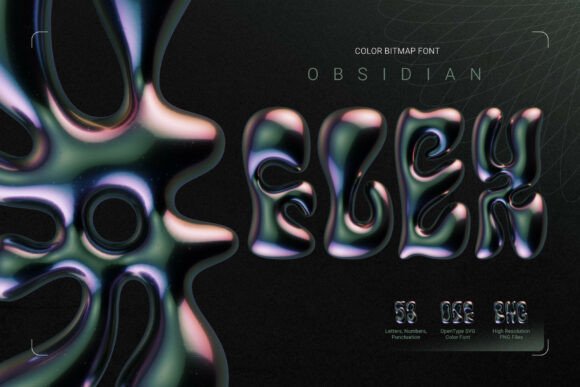
In a landscape saturated with flat vectors and minimalism, there is a growing desire for depth, texture, and personality in typography. This is where Obsidian Flex enters the conversation. It is not merely a typeface; it is a fully rendered 3D asset that brings a literal shine to your projects. As a smooth 3D bitmap font, Obsidian Flex features a glossy, reflective surface that immediately commands attention. It bridges the gap between vintage groovy aesthetics and modern digital rendering, offering a dark yet colorful mood that feels distinctively premium.
For designers, entrepreneurs, and content creators, the challenge often lies in finding a typeface that looks finished. Standard fonts require extensive manual editing—adding bevels, shadows, and gradients—to achieve a 3D look. Obsidian Flex removes that friction. With its nicely inflated shape and ready-to-use finish, it serves as a powerful design asset for anyone looking to inject energy and professionalism into their visual identity without spending hours on post-production effects.
Understanding the Modern Typography of Color Fonts
To appreciate what Obsidian Flex offers, it helps to understand the technology behind it. This is a Color Bitmap OpenType-SVG font. While traditional fonts are vector-based line art that you color in manually, an OpenType-SVG font contains high-resolution bitmap data embedded directly within the font file. This allows for complex shading, transparency, and 3D effects that vector formats simply cannot replicate.
Practically speaking, this means you can type on your keyboard and get a fully rendered, glossy, 3D letterform instantly. The "dark yet colorful mood" of Obsidian Flex isn't a filter applied later; it is baked into the character design. The technology represents a significant leap in modern typography, allowing for the creation of a premium font that functions with the ease of a standard OTF. For those working in Adobe Photoshop, Illustrator, InDesign, or Procreate, the workflow is seamless. You treat it like any other typeface, but the result is far more complex.
Visual Personality: Vintage Groovy Meets High-Gloss Depth
The character of Obsidian Flex is defined by duality. It possesses a vintage, groovy foundation, reminiscent of the playful, rounded typography popular in the 1970s, yet it renders this style with a hyper-modern, polished finish. The shapes are "nicely inflated," giving the letters a tactile, rubbery quality that invites the viewer in. However, the glossy, reflective surface adds a layer of sophistication and edge.
This combination makes it a standout display font. It avoids the rigid geometry of a standard sans serif font and the seriousness of a traditional serif font. Instead, it occupies a unique space that is playful yet authoritative. The dark background of the glyphs ensures that the colorful reflections pop, creating a high-contrast visual that works exceptionally well in busy environments like social media feeds or crowded retail shelves.
Strategic Applications: Where Obsidian Flex Shines
Choosing the right creative font depends entirely on the context of the project. Because Obsidian Flex is a display font with heavy visual weight, it is best suited for headlines, logos, and short bursts of text where impact is the primary goal.
Branding and Logo Design
For startups and small businesses looking to establish a brand identity that feels modern and confident, this font offers a ready-made solution. It works particularly well for brands in the entertainment, gaming, tech, or lifestyle sectors. Using Obsidian Flex in a logo design immediately communicates that a brand is current and detail-oriented. The 3D effect suggests depth and substance, which can subconsciously influence how customers perceive the quality of your product or service.
Digital Marketing and Social Media
In the fast-scrolling world of social media graphics, stopping the thumb is everything. The reflective surface of Obsidian Flex catches the "light" on screen, making it ideal for Instagram stories, YouTube thumbnails, and promotional banners. It provides a level of visual polish that often requires a graphic designer to create manually, allowing solo creators and marketers to produce high-quality assets quickly.
Packaging and Editorial Design
In packaging design, shelf appeal is paramount. The inflated, glossy nature of Obsidian Flex mimics physical materials like plastic or chrome, making it a strong choice for product labels, especially in the beauty, food, or beverage industries. Similarly, in editorial design, such as magazine covers or book titles, it can be used to create a focal point that breaks the monotony of standard body text.
Technical Considerations and Font Pairing
While Obsidian Flex is a powerful tool, it requires a thoughtful approach to font pairing. Because it is visually dense and complex, it should rarely be paired with other decorative or script fonts. The goal is balance.
- The Clean Contrast: Pair Obsidian Flex with a clean, geometric sans serif font for body copy. The simplicity of the sans serif will allow the headline font to breathe and remain the hero of the layout.
- The Structured Balance: If the brand leans more editorial, a sturdy serif font can provide a nice textual contrast, grounding the playful nature of the 3D headline.
It is important to remember that this is a bitmap font. This means it does have some limitations compared to vector fonts. It cannot be infinitely scaled up without eventually losing quality, though the included high-resolution PNG files (averaging 9 megapixels) ensure it remains crisp for most digital and standard print applications. Additionally, the font supports the English language and basic punctuation, so it is best to review the included screenshots to verify character availability before starting a project.
Evaluating Project Fit and Licensing
Before integrating Obsidian Flex into a workflow, it is crucial to evaluate the specific needs of the project. If your design requires ultra-small body text, this is not the right choice; the details of the glossy surface would be lost, and readability would suffer. It is a commercial font designed for presence, not for paragraphs.
For web design, while the font files work in modern browsers that support color fonts, performance should be considered due to the file size of bitmap data. Often, converting the text to outlines or using the provided PNGs for static web headers is a more efficient approach.
Ultimately, Obsidian Flex is a versatile design asset that solves a common creative problem: how to achieve a high-end, 3D look quickly. Whether you are a crafter making decals, a blogger designing a header, or a publisher creating a cover, it offers a distinct visual language that combines the nostalgia of groovy typography with the sharpness of modern digital art. By understanding its strengths and limitations, you can leverage this font to elevate your projects and capture your audience's attention instantly.